

DIY Paint Restoration. In 2026, the art of car detailing has undergone a technological renaissance. While faded, chalky paint once signaled the end of a vehicle’s aesthetic life, modern chemical engineering and “smart” abrasives have made it possible to achieve a showroom shine in your own driveway.
Faded Paint Restoration is typically the result of oxidation—a chemical reaction where UV rays, oxygen, and environmental pollutants break down the paint’s molecular structure.
This guide provides a detailed, step-by-step methodology to reverse years of neglect using the latest 2026 techniques and products.
1. Deep Decontamination: Beyond the Basic Wash
You cannot restore paint if you are working over a layer of microscopic “road barnacles.” In 2026, we use a two-phase decontamination process to ensure a pristine canvas.
The pH-Neutral Strip Wash
Start with a high-lubricity, pH-neutral car shampoo. For faded paint, avoid “wash and wax” products; you want a “strip wash” that removes old waxes and surface oils.
- The 2-Bucket Method: Use one bucket for soapy water and another for rinsing your wash mitt. This prevents dirt from being dragged back across the paint, causing further scratches.
- The 2026 Update: Many detailers now use snow foam cannons with “intelligent surfactants” that encapsulate dirt particles, lifting them off the surface before you even touch the car with a mitt.
The Clay Bar Treatment
Even after washing, your paint will likely feel like fine sandpaper. This is embedded contamination (industrial fallout, brake dust, and tree sap).
- How to do it: Use a synthetic clay mitt or a traditional clay bar with a dedicated lubricant. Glide the clay across the surface in straight, overlapping lines.
- The Test: Place your hand inside a thin plastic sandwich bag and run it over the dry paint. If you feel bumps, you need to keep claying until it feels as smooth as glass.
2. Chemical Oxidation Removal
If your paint is severely faded (looking “white” or “chalky”), you need to chemically soften the oxidation before you start mechanical buffing.
Using Paint Cleansers
In 2026, non-abrasive chemical cleansers have become highly advanced. These products use specialized solvents to dissolve oxidized paint binders without removing the healthy paint underneath.
- Application: Apply the cleanser to a microfiber applicator pad and work it into the faded areas using circular motions.
- The Result: You will notice your applicator pad turning the color of your car. This is normal; you are removing the “dead” paint cells that block the shine.
3. The Correction Phase: Polishing and Buffing
This is where the magic happens. To bring back the shine, you must level the paint surface to allow light to reflect perfectly.
Choosing Your Machine
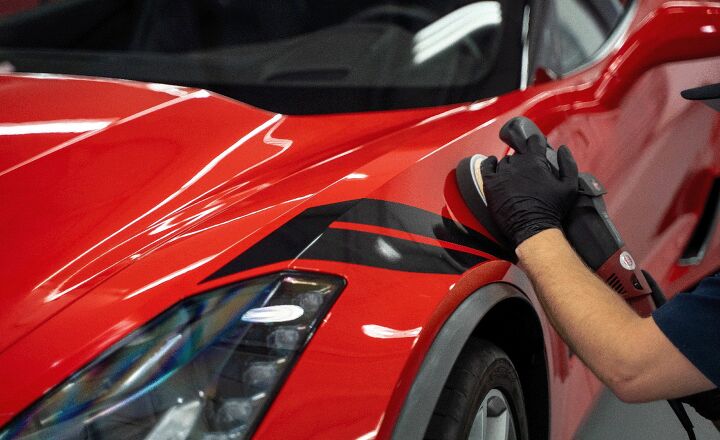
While you can polish by hand, a Dual-Action (DA) Polisher is recommended in 2026. Unlike old-fashioned rotary buffers, a DA polisher mimics the motion of a hand but at thousands of oscillations per minute, making it nearly impossible to “burn” through your paint.
Selecting Compounds and Polishes
- Cutting Compound: Use this for heavy oxidation and deep scratches. In 2026, “diminishing abrasive” technology is standard—the grit starts coarse to cut the damage and breaks down into a fine polish as you work.
- Finishing Polish: Once the oxidation is gone, follow up with a fine polish to remove any “haze” and bring out the deep, mirror-like reflection.
The Technique
- Apply 4–5 pea-sized drops of compound to a foam cutting pad.
- Work in a small 2′×2′ section.
- Move the polisher slowly in a cross-hatch pattern (up-and-down, then side-to-side).
- Wipe away the residue with a high-GSM microfiber towel to inspect your progress.
4. Deep Nourishment: The “Show Car” Secret
If you are working on older, single-stage paint (common on classic cars), the paint is likely “thirsty.” Modern 2026 formulations include Glazes that act as conditioners.
Applying a Glaze
A glaze is a non-abrasive oil-rich liquid that fills in microscopic imperfections and saturates the paint pigment.
- Why it works: It adds a “wet look” that polish alone cannot achieve.
- Pro Tip: Apply the glaze by hand and let it dwell for 15–20 minutes before buffing off. This allows the oils to penetrate the pores of the paint.
5. Modern Protection: Locking in the Shine
The most critical step is ensuring the oxidation doesn’t return. In 2026, we have moved beyond basic carnauba wax to more durable molecular barriers.
Ceramic Coatings vs. Graphene Sealants
- Graphene Sealants: These are the DIY favorite of 2026. They provide a “honeycomb” molecular structure that is incredibly resistant to heat and UV rays. They typically last 6–12 months and are as easy to apply as a spray-and-wipe.
- Nano-Ceramic Coatings: For the ultimate “showroom” protection, a ceramic coating creates a semi-permanent glass layer over your paint.
- The 2026 Standard: Self-healing ceramic coatings are now available for home use. These use shape-memory polymers that can “heal” minor swirl marks when exposed to the heat of the sun.
Comparison: 2026 Tech vs. Traditional Methods
In the past, Paint Restoration was a high-risk activity that often resulted in “buffer trails” or thin clear coats. Today, the shift toward Dual-Action polishers and Self-leveling abrasives has democratized professional-grade results. Furthermore, the longevity of protection has jumped from 30 days (wax) to 5+ years (ceramic), meaning you only have to do this “deep dive” restoration once if you maintain it properly.
Conclusion
Paint Restoration faded paint is a rewarding journey that can add thousands of dollars to your vehicle’s value. By following these five steps—decontaminating, chemically cleaning, mechanically correcting, nourishing, and protecting—you can turn a dull, neglected car into a head-turner. In 2026, the tools are smarter and the chemicals are safer, so there has never been a better time to reclaim your showroom shine.
About the Author




