
Inside Mazda’s Plan for Carbon-Negative Gas Engines by 2026, The automotive world stands at a historic crossroads in 2026. While many manufacturers have pivoted entirely toward battery-electric vehicles, one brand remains defiantly unique.
Mazda is doubling down on the internal combustion engine (ICE) with a revolutionary twist. They are not just aiming for cleaner exhaust pipes or better fuel economy.
Instead, Mazda is pioneering a path toward carbon-negative gasoline engines. This ambitious strategy relies on advanced biofuels and groundbreaking on-board carbon capture technology.
The Philosophy of the Multi-Solution Approach
Mazda has long championed what they call the “Multi-Solution Approach” to global sustainability. They believe that a single solution, like electrification, cannot solve the climate crisis alone. This is because electric vehicles are only as clean as the power grids that charge them. Furthermore, over a billion internal combustion vehicles already exist on roads today. Mazda’s goal is to make these existing and future engines part of the solution. By focusing on the fuel rather than just the tailpipe, they aim for true climate neutrality.
The Secret Weapon: Algae-Derived Biofuels
At the heart of Mazda’s 2026 strategy is a massive investment in microalgae research. Unlike traditional biofuels made from corn or soy, algae do not compete with food crops. These microorganisms grow rapidly in controlled tanks and absorb vast amounts of atmospheric carbon. Mazda’s engineers have successfully identified specific algae strains with high oil content for refinement. This process essentially recycles carbon that is already present in our current atmosphere.
From Lab to Road: The Science of Growth
The production of these biofuels involves biological carbon recycling through living organisms. Plants and algae absorb $CO_2$ as they grow, which is later released when the fuel burns. This cycle creates a net-zero effect, as no “new” carbon is added from underground fossil sources. What’s interesting is that these fuels require no significant modifications to existing engines. Mazda has already demonstrated this by powering its Heritage Fleet with 100% sustainable blends. Consequently, millions of older cars could theoretically become carbon-neutral overnight with the right fuel.
Achieving Carbon Negativity with Mobile Capture
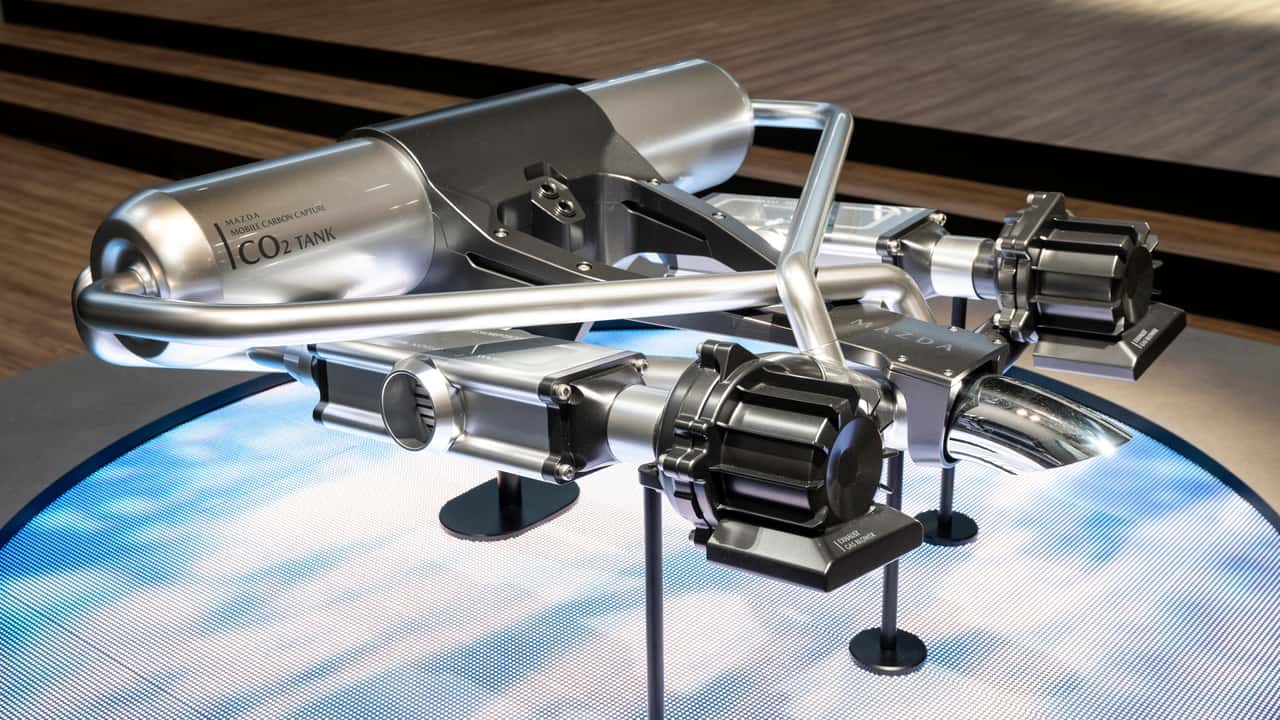
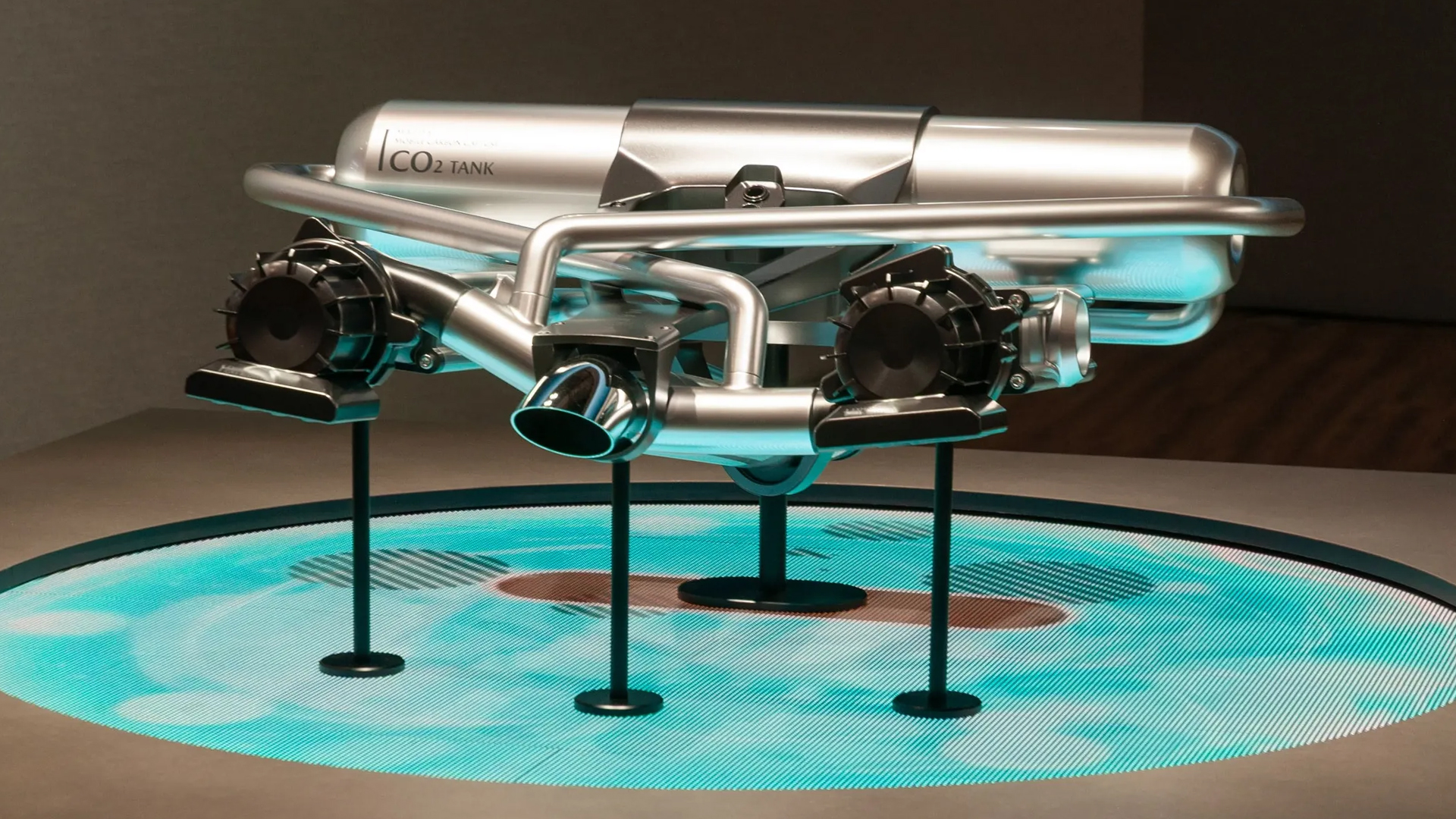
While net-zero is a significant achievement, Mazda’s 2026 roadmap goes one step further. They are developing “Mazda Mobile Carbon Capture” technology to pull $CO_2$ directly from exhaust gases. Internal combustion engines produce exhaust with $CO_2$ concentrations up to 350 times higher than ambient air. This high concentration makes capturing the gas much more efficient than traditional air-capture methods. If a car captures more carbon than was emitted during the fuel’s production, it becomes carbon-negative.
Engineering the On-Board Capture System
The challenge for 2026 lies in integrating this equipment without adding excessive weight. Mazda’s prototype system uses specialized adsorption materials to trap $CO_2$ before it leaves the tailpipe. This captured carbon can then be harvested at service stations and recycled into new fuel. It creates a closed-loop system where the car effectively cleans the air as it drives. However, engineers are still refining the system to handle varying exhaust temperatures efficiently. This breakthrough could redefine the internal combustion engine as a tool for environmental restoration.

Skyactiv-Z: The Next Generation of Efficiency
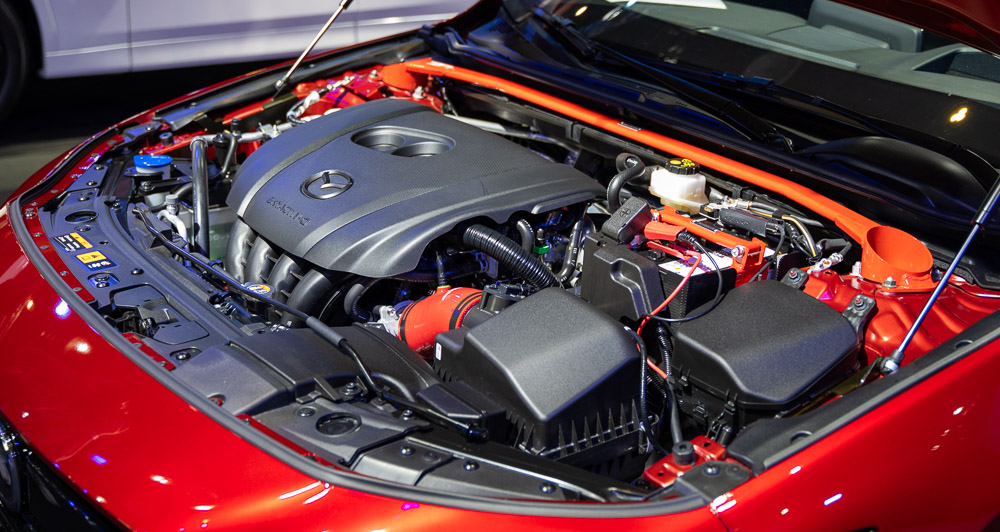
To support these new fuels, Mazda is launching the “Skyactiv-Z” engine family in late 2026. This new architecture focuses on “lambda one” combustion, which ensures a perfect air-to-fuel ratio. By building on the previous Spark Controlled Compression Ignition (SPCCI) technology, it delivers massive torque and efficiency. These engines are designed to be fully compliant with strict Euro 7 and LEV4 emission standards. They represent the final evolution of the gasoline engine, optimized for the post-fossil fuel era.
Integrating Hybrid Synergy
The Skyactiv-Z engines will not work in isolation; they will be paired with refined hybrid systems. This allows for seamless transitions between electric and combustion power in urban environments. The 2026 Mazda CX-5 is expected to be the first major recipient of this high-efficiency powertrain. By combining hybrid electrification with carbon-neutral fuel, Mazda achieves a balance of performance and planet-care. Furthermore, this approach protects the “Jinba Ittai” driving experience that fans have loved for decades. What’s impressive is how these hybrids maintain an engaging, mechanical feel.
The Global Impact of Sustainable Combustion
Mazda’s vision extends far beyond their own new car sales in major cities. They recognize that many parts of the world lack the infrastructure for a total EV transition. Carbon-neutral and negative fuels can utilize existing gas stations and transport pipelines. This ensures that emerging markets can also participate in the reduction of greenhouse gases. It provides a realistic bridge for the transition away from fossil fuels over the next decade. In addition, it preserves the automotive heritage and culture tied to the sounds of a running engine.
Strategic Partnerships for a Greener Future
Mazda is not working alone on this massive infrastructure and technology shift. They have partnered with companies like SUSTAIN Fuel Technologies to test these fuels in real-world racing. These high-stress environments prove that sustainable fuels can handle the rigors of performance driving. Furthermore, Mazda is collaborating with local energy providers in Japan to decarbonize their manufacturing plants. Their roadmap aims for carbon neutrality across all global facilities by 2035. This holistic view ensures that every step of a car’s life is environmentally responsible.
Why 2026 is a Turning Point for the ICE
For years, the death of the internal combustion engine seemed like an absolute certainty. Mazda’s recent breakthroughs suggest that the engine is merely evolving into a new form. By 2026, the distinction between “clean” and “dirty” cars will shift from the powertrain to the lifecycle. A carbon-negative gas engine could potentially be cleaner than an EV powered by a coal-heavy grid. This realization is sparking a true “engine revolution” within the global automotive industry. Consequently, other manufacturers are now reconsidering their own paths toward total electrification.
The Role of Carbon Capture in Society
The captured $CO_2$ from Mazda vehicles could have numerous industrial applications. It can be used as a material for creating e-fuels or as a nutrient in microalgae cultivation. This creates a circular economy where the car’s waste becomes the raw material for its next tank of fuel. Mazda envisions a future where driving actually helps to lower the global concentration of atmospheric carbon. This is a radical departure from the traditional view of the car as a polluter. It turns every driver into an active participant in the fight against climate change.
Final Thoughts on Mazda’s Sustainable Vision
Mazda’s plan for carbon-negative gas engines by 2026 is a bold, high-stakes gamble. It challenges the prevailing industry narrative and demands significant technological innovation. However, if successful, it could save the internal combustion engine for generations to come. It offers a path to sustainability that respects the past while protecting the future. Travelers can look forward to “coolcations” in mountain retreats, knowing their journey is carbon-negative. The joy of driving is no longer at odds with the health of our planet.
About the Author


