
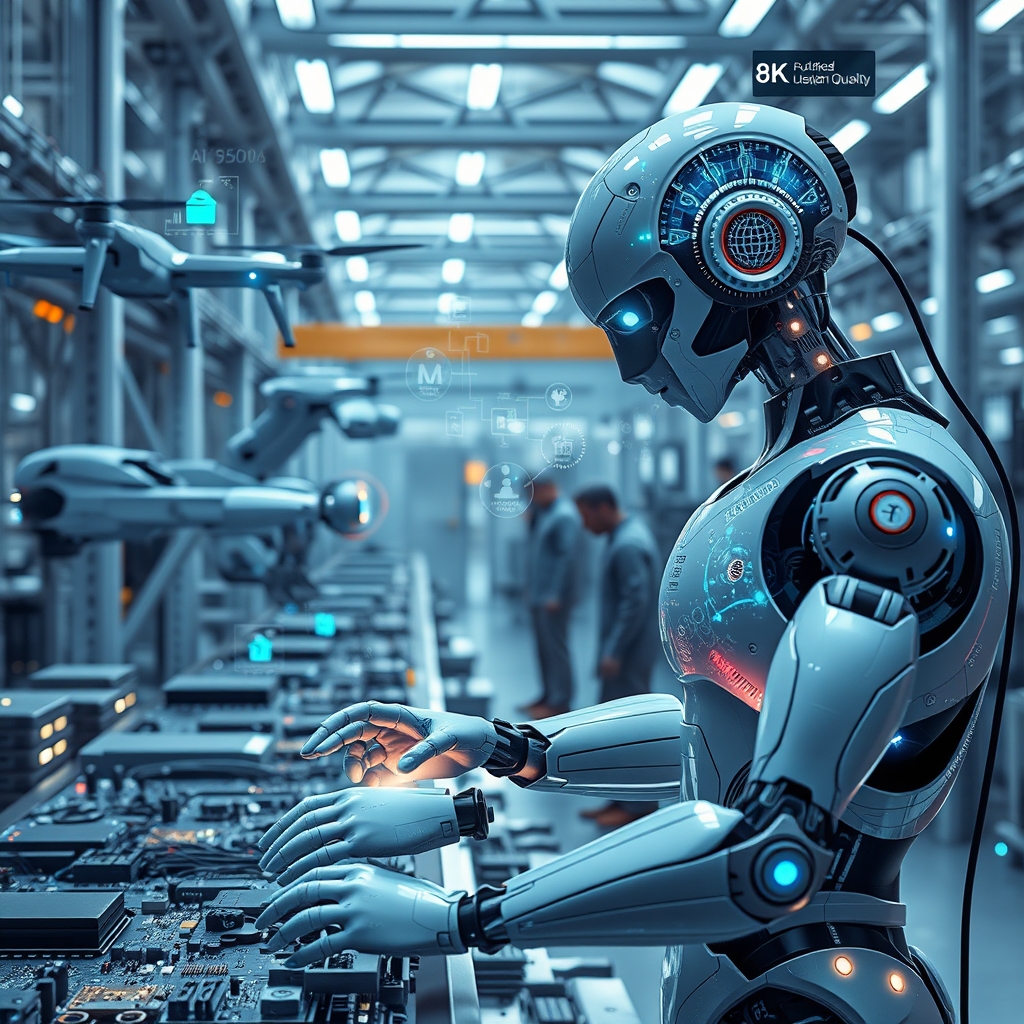
Artificial intelligence and machine learning are no longer futuristic concepts—they are the driving forces behind today’s robotics and automation revolution. Businesses across industries are leveraging these technologies to enhance efficiency, reduce costs, and unlock unprecedented innovation. In 2024, AI-powered robots are performing tasks once thought impossible for machines, from precision surgery to autonomous warehouse management. This transformation is reshaping the workforce, creating new opportunities while demanding adaptability from professionals worldwide.
Furthermore, the integration of AI and machine learning into robotics is accelerating at an unprecedented pace. According to recent data, the global robotics market is projected to reach $214.68 billion by 2028, with AI-driven automation contributing to over 60% of this growth. Companies are investing heavily in smart systems that can learn, adapt, and make decisions in real time, reducing human error and increasing productivity. This shift is not just about replacing manual labor; it’s about augmenting human capabilities to achieve feats previously out of reach.
How Are AI and Machine Learning Transforming Robotics?
AI and machine learning are the backbone of modern robotics, enabling machines to perform complex tasks with minimal human intervention. Traditional robots followed pre-programmed instructions, limiting their flexibility. However, AI-powered robots now use deep learning algorithms to analyze vast datasets, recognize patterns, and improve their performance over time. For example, autonomous drones equipped with computer vision can inspect infrastructure, identify defects, and even predict maintenance needs before failures occur.
In addition, machine learning models are enhancing robotic precision in manufacturing. Factories are deploying collaborative robots, or cobots, that work alongside humans to assemble products with near-perfect accuracy. These cobots use reinforcement learning to optimize their movements, reducing waste and speeding up production lines. The result is a 30% increase in manufacturing efficiency, as reported by industry leaders in 2024. This synergy between AI and robotics is not just improving output—it’s redefining what’s possible in industrial automation.
What Industries Are Leading the AI and Robotics Revolution?
Several industries are at the forefront of adopting AI and robotics, with healthcare and logistics leading the charge. In healthcare, AI-driven robotic surgeons are performing minimally invasive procedures with greater precision than human hands. These systems analyze patient data in real time, adjusting their techniques to minimize risks and improve outcomes. For instance, robotic-assisted surgeries have reduced recovery times by up to 50% in some cases, revolutionizing patient care.
Next, the logistics sector is undergoing a radical transformation thanks to AI-powered automation. Warehouses are now home to autonomous mobile robots that navigate aisles, pick items, and fulfill orders with remarkable speed. Companies like Amazon and Walmart are using these systems to process millions of orders daily, reducing delivery times and operational costs. In 2023 alone, the adoption of robotic automation in logistics increased by 45%, a trend that shows no signs of slowing down.
What Challenges Does AI-Driven Robotics Face?
Despite its rapid advancement, AI-driven robotics faces significant challenges that must be addressed for widespread adoption. One of the biggest hurdles is the ethical implications of autonomous systems. As robots take on more decision-making roles, questions arise about accountability, bias, and transparency in AI algorithms. For example, if an autonomous vehicle makes a split-second decision that results in an accident, who is responsible—the manufacturer, the programmer, or the AI itself?
Moreover, the high cost of implementing AI and robotics remains a barrier for many businesses. While large corporations can afford cutting-edge systems, small and medium-sized enterprises often struggle with the upfront investment. However, as technology advances, prices are expected to drop. Experts predict that by 2026, the cost of AI-powered robotic systems will decrease by 25%, making them more accessible to a broader range of industries.
How Can Businesses Prepare for the AI and Robotics Era?
To thrive in the AI and robotics era, businesses must prioritize upskilling their workforce. Employees need training in AI literacy, data analysis, and robotic operation to stay relevant in an automated world. Companies like Google and Microsoft are already offering certification programs to help professionals transition into AI-driven roles. Investing in continuous learning will not only future-proof careers but also ensure that businesses can fully leverage the potential of these technologies.
In addition, businesses should focus on integrating AI and robotics into their long-term strategies. This means identifying processes that can be automated, partnering with tech providers, and fostering a culture of innovation. For example, retail companies are using AI-powered chatbots to handle customer inquiries, freeing up human agents to focus on complex issues. By embracing automation, businesses can streamline operations, reduce costs, and deliver better customer experiences.
What Does the Future Hold for AI, Machine Learning, and Robotics?
The future of AI, machine learning, and robotics is brimming with possibilities. In the next decade, we can expect to see even greater collaboration between humans and machines, with robots handling repetitive tasks while humans focus on creativity and problem-solving. Advances in natural language processing will enable robots to understand and respond to human emotions, making them more intuitive and user-friendly.
Furthermore, the rise of edge computing will allow robots to process data locally, reducing latency and improving real-time decision-making. This will be particularly impactful in fields like healthcare, where split-second decisions can mean the difference between life and death. As AI and machine learning continue to evolve, they will unlock new frontiers in robotics, transforming industries and shaping the future of work in ways we are only beginning to imagine.
FAQ: Common Questions About AI, Machine Learning, and Robotics
How Is AI Different from Machine Learning in Robotics?
AI is a broad field that encompasses any technology enabling machines to mimic human intelligence, while machine learning is a subset of AI focused on training algorithms to learn from data. In robotics, AI provides the framework for decision-making, while machine learning refines those decisions through experience and pattern recognition. For example, an AI-powered robot might use machine learning to improve its grip strength over time by analyzing past interactions with objects.
What Are the Most Exciting Applications of AI in Robotics Today?
Some of the most exciting applications include autonomous vehicles, robotic surgery, and AI-driven customer service bots. Autonomous vehicles use AI to navigate roads, avoid obstacles, and make real-time decisions, while robotic surgeons perform delicate procedures with unmatched precision. AI-driven customer service bots, like those used by banks and retailers, handle millions of inquiries daily, providing instant support and freeing up human agents for more complex tasks.
Will AI and Robotics Replace Human Jobs?
While AI and robotics will automate certain jobs, they will also create new opportunities in fields like AI ethics, robotics maintenance, and data science. The World Economic Forum estimates that by 2025, AI and automation will displace 85 million jobs but create 97 million new ones. The key to thriving in this shift lies in adaptability and continuous learning, as roles that require creativity, emotional intelligence, and complex problem-solving will remain in high demand.
AI and machine learning are not just shaping the future of robotics—they are redefining the way we work, live, and interact with technology. As these innovations continue to evolve, businesses and individuals must embrace change, invest in education, and prepare for a world where humans and machines collaborate like never before.
About the Author


